PhysicalTherapy.com Phone: 866-782-6258


Importance of the OASIS in Adult Assessment

Jennifer Loehr, M.A., CCC-SLP

December 22, 2011

Question

What does the acronym OASIS stand for? What is the importance of this assessment?

Answer

The OASIS (Outcome and Assessment Information Set) is a tool utilized by home health agencies and the Centers for Medicare and Medicaid Services (CMS) to determine funding reimbursement for care provided. This tool encompasses sociodemographic, environmental, support system, health status, and functional status attributes of adult patients. In addition to measuring patient outcomes, OASIS data have three important uses in the areas of:

  • Patient assessment and care planning for individual adult patients
  • Agency-level case mix reports that contain aggregate statistics on various patient

characteristics such as demographic, health, or functional status at start of care

  • Internal home health agency (HHA) performance improvement

The OASIS document can be completed by the nurse or therapist upon admission, recertification, transfer or discharge of a patient from services to the home health agency. This document is paramount in determining the level of care and reimbursement to the HH agency for services provided to the patient.

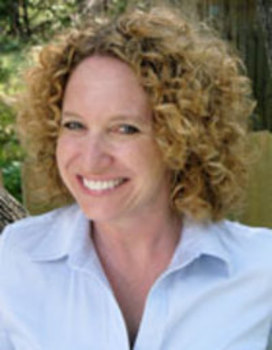
Jenny Loehr is a speech-language pathologist employed by Gentiva Health Services. Her focus of practice in the past twenty years has been adult/geriatric neurology with an emphasis on dementia programming. She currently oversees and implements the rehabilitation program at Arden Courts Assisted Living Facility and Cedar Ridge Alzheimer's Specialty Care Center in Austin Texas. Ms. Loehr has made numerous presentations at the Texas Speech and Hearing Association and the annual convention of the American Speech and Hearing Association.


jennifer loehr

Jennifer Loehr, M.A., CCC-SLP

Jenny Loehr is a speech-language pathologist employed by Gentiva Health Services. Her focus of practice in the past fifteen years has been adult/geriatric neurology with an emphasis on dementia programming. She currently oversees and implements the rehabilitation program at Arden Courts of Austin, an Alzheimer's assisted living facility. Ms. Loehr has presented numerous times at the annual convention of the American Speech and Hearing Association.


Related Courses

Interdisciplinary Approach To Stroke Rehabilitation: Outpatient, Home Health, And Community Rehabilitation Phase
Presented by Alaena McCool, MS, OTR/L, CPAM, Katherine George, PT, DPT
Recorded Webinar

Presenters

Alaena McCool, MS, OTR/L, CPAMKatherine George, PT, DPT
Course: #4609Level: Intermediate2 Hours
  'Case studies'   Read Reviews
The unique relationship between the occupational and physical therapist when treating an acute, subacute, or chronic stroke diagnosis will be distinguished in this two-part series. Part two will focus on the subacute and chronic stroke, differentiating the home, outpatient, and community phases of rehabilitation, as well as examining the evaluation, evidence, and interventions in each setting to optimize independence for the patient.

OASIS E: New Items
Presented by Cindy Krafft, PT, MS, HCS-O
Recorded Webinar

Presenter

Cindy Krafft, PT, MS, HCS-O
Course: #4612Level: Intermediate2 Hours
  'Easy to understand adn too the point'   Read Reviews
The course will focus on the items that are unique to the OASIS E data collection process. Official guidance sources will be explored to ensure the accuracy of the information.

The Salzman Matrix: Combining Cognitive & Motor Tasks with Purpose
Presented by Andrea Salzman, MS, PT
Live WebinarFri, Feb 27, 2026 at 12:00 pm EST
Fri, Feb 27, 2026 at 12:00 pm EST

Presenter

Andrea Salzman, MS, PT
Course: #5381Level: Introductory2 Hours
Cognition and movement are tightly linked in functional activity, yet integrating them in rehabilitation can be challenging. While dual-task training is commonly used, poorly matched cognitive demands can interfere with motor performance and learning. This introductory course introduces the Salzman Matrix, an evidence-aligned clinical reasoning framework designed to guide purposeful cognitive–motor integration while minimizing interference. Participants will learn how to distinguish cognitive processes that support movement from cognitive demands that commonly compete with motor goals, and how to apply this framework to functional treatment planning and documentation across rehabilitation settings.

Home Design For Aging In Place
Presented by Nishi Brahmbhatt, OTD-PP, MOTR/L, CAPS, CDP, & Realtor®
Recorded Webinar

Presenter

Nishi Brahmbhatt, OTD-PP, MOTR/L, CAPS, CDP, & Realtor®
Course: #5132Level: Introductory1 Hour
  'Very important topic area covered clearly by instructor'   Read Reviews
The course aims to inform on the market segments for aging in place, types of design for aging in place, critical areas to assess in the home to facilitate aging in place, and home modifications that can be made to critical areas in the home.

Updated Strategies for Designing Exercise Therapy for the Older Adult Home Health Patient
Presented by Olaide Oluwole-Sangoseni, PT, PhD, DPT, MSc, GCS
Recorded Webinar

Presenter

Olaide Oluwole-Sangoseni, PT, PhD, DPT, MSc, GCS
Course: #4135Level: Introductory2 Hours
  'A lot of information and real life examples and information given'   Read Reviews
Evidence-informed patient-centered care requires that home health physical therapists set achievable goals by avoiding the underdosing of exercise intensity for older adults. Patient-specific approaches to exercise prescriptions are cost-effective in reducing re-hospitalizations and promoting an early return to functional activities. This course is directly related to the practice of physical therapy and is therefore appropriate for the PT/PTA.