PhysicalTherapy.com Phone: 866-782-6258


Common Concerns with Mobility Training in Schools

Michelle Lange, OTR, ABDA, ATP/SMS

July 7, 2015

Question

What are some common concerns when it comes to mobility training and a new power chair at school?  

Answer

There are some common concerns that I find when it comes to mobility training and this new power chair showing up school.  The most common concerns tend to be safety of the other students and behavioral issues on the part of the driver.  Now training in context, as part of the school day, means that students will bump into the wall.  They may even bump into other students.  Here are some suggestions.  We do not want to start that in-context training as part of the school day with other students around right away.  We want to start in those quiet areas, help the child build some skills, and then start moving more into context.  

You can also reduce one or two settings on the chair to help the power chair have less force.  One is called power and the other is called torque.  Torque is like driving in low gear.  These chairs have so much power in them that you can literally move furniture across the room with a power wheelchair.  They can be turned down so that if a new driver bumps into a wall, they will simply bump the wall rather than put a hole through the drywall with their footplate.  It is important with the new driver to have this chair turned down, not just in power and torque, but also speed and acceleration.  That gives a new driver time to respond to movement of their chair.  If the chair is too responsive, then the driver will be less successful.  As they build in their skills, the programming can be changed.  Also power chairs tend to have more than one drive; sometimes that is called a profile.  It could be that drive 1 is set really slow.  Drive 2 may be a little faster and drive 3 might be for outdoors, when the client wants to really book it.  It could be that this new driver is regulated to drive 1 for a while.  If you are not familiar with wheelchair programming this is something that the supplier can help you out with.

In general, I recommend that if the student is acting up that the people around them try to address this the same way they would a typical student whenever possible.  For example, if a child is running down the hallway, the child is required to return to their starting point, back to the beginning and they have to then walk down the hallway.  If a student is driving their wheelchair too fast, then that student can be required to come back to the teacher, for example, put that chair at a slower drive and go down the hallway at an appropriate speed.  As much as possible, we want to address it the same way as their typical peers.  I get many calls from people saying we need to take this chair away because the client is driving too fast, has bumped into something, etc.  Instead of removing the wheelchair, we need to intervene on these behaviors. 


michelle lange

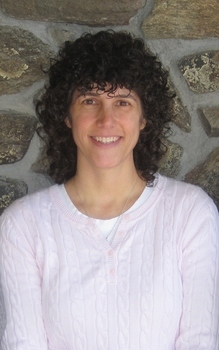
Michelle Lange, OTR, ABDA, ATP/SMS

Michelle is an occupational therapist with 25 years of experience and former Clinical Director of The Assistive Technology Clinics of The Children’s Hospital of Denver. She is a well-respected lecturer, both nationally and internationally and has authored 7 book chapters and over 175 articles. She is the editor of Fundamentals in Assistive Technology, 4th ed. Michelle is on the teaching faculty of RESNA and the University of Pittsburgh. She is on the RERC on Wheeled Mobility Advisory Board. Michelle is a credentialed ATP, credentialed SMS and is a Senior Disability Analyst of the ABDA.


Related Courses

Wheelchair Positioning: Postural Care
Presented by Michelle Lange, OTR, ABDA, ATP/SMS
Recorded Webinar

Presenter

Michelle Lange, OTR, ABDA, ATP/SMS
Course: #3596Level: Advanced1 Hour
  'Knowledge imparted'   Read Reviews
The goals of wheelchair seating include managing posture and pressure as well as providing stability for function. Postural care addresses positioning outside of the wheelchair, particularly during sleep, and can be used to improve the quality and duration of sleep, promote health and maintain safety during sleep, as well as to minimize, prevent and even reverse orthopedic changes.

Dynamic Seating
Presented by Michelle Lange, OTR, ABDA, ATP/SMS
Recorded Webinar

Presenter

Michelle Lange, OTR, ABDA, ATP/SMS
Course: #3093Level: Intermediate1 Hour
  'It taught me about a lot of the options that are available here in the US and the pros and cons of the different items'   Read Reviews
Dynamic seating has four primary functions – to allow movement, to diffuse force, to protect the client, and to protect the seating system and mounting hardware. This course will take a look at the product options, discuss clinical indicators and contra-indicators for dynamic components and present case studies to illustrate these points.

Positioning the Head
Presented by Michelle Lange, OTR, ABDA, ATP/SMS
Recorded Webinar

Presenter

Michelle Lange, OTR, ABDA, ATP/SMS
Course: #3098Level: Intermediate2 Hours
  'Good info that covered a variety of topics'   Read Reviews
This course will discuss various strategies to optimize head position. First, we will explore strategies beyond the head support, including specific positioning interventions and addressing visual issues. Second, we will explore posterior head supports in depth, matching specific features to client needs. Third, we will explore other options which may be required if posterior support alone is inadequate, including anterior head support.

Wheelchair Mobility: Optimizing Driving in Power Wheelchairs
Presented by Michelle Lange, OTR, ABDA, ATP/SMS
Recorded Webinar

Presenter

Michelle Lange, OTR, ABDA, ATP/SMS
Course: #3622Level: Advanced1 Hour
  'Clear explenanation of different types of power wheelchair configurations'   Read Reviews
Power wheelchair evaluation determines appropriateness for power wheelchair use and then determines the optimal power wheelchair base, power seating, driving method and other needed components. Optimizing power wheelchair driving is critical to improve outcomes and includes choosing the best drive wheel configuration, utilizing tracking technologies, and programming.

Positioning the Pelvis
Presented by Michelle Lange, OTR, ABDA, ATP/SMS
Recorded Webinar

Presenter

Michelle Lange, OTR, ABDA, ATP/SMS
Course: #3157Level: Intermediate1 Hour
  'Easy to follow'   Read Reviews
The position of the pelvis very much determines the position of the trunk and lower extremities and so achieving and maintaining the optimal position is critical. This course will present common pelvic asymmetries with suggested strategies to address each challenge. Providing as neutral a pelvic position as possible improves overall posture, stability and function.