Is the ATP certification exam based on a model and what are the components of that model?
Answer
Much of the ATP certification exam is based on the HAAT model. That stands for Human, Activity, and Assistive Technology. The components are human, activity, the assistive technology, and the context. Components are considered individually and with each other to consider design, select, implement, and evaluate the appropriate assistive technology.
Continued and its subsidiaries provide professional education authored by qualified Subject Matter Experts for continuing education purposes. These materials are intended for educational purposes and do not constitute medical advice or a substitute for individual clinical judgment. Continued is not a clinical healthcare provider; the licensed professional is solely responsible for ensuring that the application of any techniques or information presented is within their legal scope of practice and jurisdictional requirements.
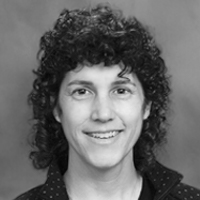
Michelle Lange, OTR, ABDA, ATP/SMS
Michelle is an occupational therapist with 30 years of experience and has been in private practice, Access to Independence, for 10 years. She is a well-respected lecturer, both nationally and internationally and has authored 6 book chapters and over 200 articles. She is the editor of Fundamentals in Assistive Technology, 4th ed. and Clinical Editor of NRRTS Directions magazine. Michelle is on the teaching faculty of RESNA. Michelle is a member of the Clinician Task Force. Michelle is a certified ATP, certified SMS and is a Senior Disability Analyst of the ABDA.
Related Courses
1https://www.physicaltherapy.com/pt-ceus/course/positioning-the-head-3098Positioning the HeadThis course will discuss various strategies to optimize head position. First, we will explore strategies beyond the head support, including specific positioning interventions and addressing visual issues. Second, we will explore posterior head supports in depth, matching specific features to client needs. Third, we will explore other options which may be required if posterior support alone is inadequate, including anterior head support.auditory, textual, visual129USDSubscriptionUnlimited COURSE Access for $129/yearOnlineOnlyPhysicalTherapy.comwww.physicaltherapy.comPositioning the HeadThis course will discuss various strategies to optimize head position. First, we will explore strategies beyond the head support, including specific positioning interventions and addressing visual issues. Second, we will explore posterior head supports in depth, matching specific features to client needs. Third, we will explore other options which may be required if posterior support alone is inadequate, including anterior head support.3098OnlinePT120M
This course will discuss various strategies to optimize head position. First, we will explore strategies beyond the head support, including specific positioning interventions and addressing visual issues. Second, we will explore posterior head supports in depth, matching specific features to client needs. Third, we will explore other options which may be required if posterior support alone is inadequate, including anterior head support.
2https://www.physicaltherapy.com/pt-ceus/course/positioning-the-pelvis-3157Positioning the PelvisThe position of the pelvis very much determines the position of the trunk and lower extremities and so achieving and maintaining the optimal position is critical. This course will present common pelvic asymmetries with suggested strategies to address each challenge. Providing as neutral a pelvic position as possible improves overall posture, stability and function.auditory, textual, visual129USDSubscriptionUnlimited COURSE Access for $129/yearOnlineOnlyPhysicalTherapy.comwww.physicaltherapy.comPositioning the PelvisThe position of the pelvis very much determines the position of the trunk and lower extremities and so achieving and maintaining the optimal position is critical. This course will present common pelvic asymmetries with suggested strategies to address each challenge. Providing as neutral a pelvic position as possible improves overall posture, stability and function.3157OnlinePT60M
The position of the pelvis very much determines the position of the trunk and lower extremities and so achieving and maintaining the optimal position is critical. This course will present common pelvic asymmetries with suggested strategies to address each challenge. Providing as neutral a pelvic position as possible improves overall posture, stability and function.
3https://www.physicaltherapy.com/pt-ceus/course/wheelchair-positioning-postural-care-3596Wheelchair Positioning: Postural CareThe goals of wheelchair seating include managing posture and pressure as well as providing stability for function. Postural care addresses positioning outside of the wheelchair, particularly during sleep, and can be used to improve the quality and duration of sleep, promote health and maintain safety during sleep, as well as to minimize, prevent and even reverse orthopedic changes.auditory, textual, visual129USDSubscriptionUnlimited COURSE Access for $129/yearOnlineOnlyPhysicalTherapy.comwww.physicaltherapy.comWheelchair Positioning: Postural CareThe goals of wheelchair seating include managing posture and pressure as well as providing stability for function. Postural care addresses positioning outside of the wheelchair, particularly during sleep, and can be used to improve the quality and duration of sleep, promote health and maintain safety during sleep, as well as to minimize, prevent and even reverse orthopedic changes.3596OnlinePT60M
The goals of wheelchair seating include managing posture and pressure as well as providing stability for function. Postural care addresses positioning outside of the wheelchair, particularly during sleep, and can be used to improve the quality and duration of sleep, promote health and maintain safety during sleep, as well as to minimize, prevent and even reverse orthopedic changes.
4https://www.physicaltherapy.com/pt-ceus/course/wheelchair-mobility-optimizing-driving-in-3622Wheelchair Mobility: Optimizing Driving in Power WheelchairsPower wheelchair evaluation determines appropriateness for power wheelchair use and then determines the optimal power wheelchair base, power seating, driving method and other needed components. Optimizing power wheelchair driving is critical to improve outcomes and includes choosing the best drive wheel configuration, utilizing tracking technologies, and programming.auditory, textual, visual129USDSubscriptionUnlimited COURSE Access for $129/yearOnlineOnlyPhysicalTherapy.comwww.physicaltherapy.comWheelchair Mobility: Optimizing Driving in Power WheelchairsPower wheelchair evaluation determines appropriateness for power wheelchair use and then determines the optimal power wheelchair base, power seating, driving method and other needed components. Optimizing power wheelchair driving is critical to improve outcomes and includes choosing the best drive wheel configuration, utilizing tracking technologies, and programming.3622OnlinePT60M
Power wheelchair evaluation determines appropriateness for power wheelchair use and then determines the optimal power wheelchair base, power seating, driving method and other needed components. Optimizing power wheelchair driving is critical to improve outcomes and includes choosing the best drive wheel configuration, utilizing tracking technologies, and programming.
5https://www.physicaltherapy.com/pt-ceus/course/matching-products-to-seating-needs-4099Matching Products to Seating NeedsOnce the wheelchair seating assessment has been completed and seating interventions considered, it is time to match specific client needs to product interventions. This course presents various categories of seating systems. Seating systems, whether linear, contoured, or molded, are comprised of primary support surfaces, secondary support components, and materials. This course is directly related to the practice of physical therapy and is therefore appropriate for the PT/PTA.auditory, textual, visual129USDSubscriptionUnlimited COURSE Access for $129/yearOnlineOnlyPhysicalTherapy.comwww.physicaltherapy.comMatching Products to Seating NeedsOnce the wheelchair seating assessment has been completed and seating interventions considered, it is time to match specific client needs to product interventions. This course presents various categories of seating systems. Seating systems, whether linear, contoured, or molded, are comprised of primary support surfaces, secondary support components, and materials. This course is directly related to the practice of physical therapy and is therefore appropriate for the PT/PTA.4099OnlinePT60M
Once the wheelchair seating assessment has been completed and seating interventions considered, it is time to match specific client needs to product interventions. This course presents various categories of seating systems. Seating systems, whether linear, contoured, or molded, are comprised of primary support surfaces, secondary support components, and materials. This course is directly related to the practice of physical therapy and is therefore appropriate for the PT/PTA.