Editor's note: This text-based course is a transcript of the webinar, Neurodiversity: How To Support Agency And Self-determination, presented by Joleen R. Fernald, PhD, CCC-SLP, BCS-CL.
*Please also use the handout with this text course to supplement the material.
Learning Outcomes
After the course, participants will be able to:
- define neurodiversity.
- list alternatives to Applied Behavioral Analysis and other behavioral interventions that may be traumatic.
- list three adjustments to clinical practice that will support agency and self-determination.
Introduction
I have been a speech language pathologist for a long time, and I have started to become much more aware of the neurodiversity movement over the past decade. What I love about our field is that there is always something new to learn and some area for us to grow in. This concept has become a personal passion for me, as both a practitioner and the mother of a daughter with special needs. I hope the information I share with you today will broaden your knowledge and provide immediate ways to apply these concepts to your practice. I want you to be able to take this information and implement it immediately. I also want to mention that I do not only see autistics on my caseload. I work with a variety of different individuals with amazing individual differences, and I want you to be aware that the ideas of neurodiversity, supporting agency, and fostering self-determination are fundamental human rights. They are not specific to only the autistic population.
Vocabulary and Terminology
Let us jump right in and get to understanding what some of this terminology actually means. Over the last few years, I have started to hear people using these terms interchangeably or synonymously, and I want to make sure that we all understand the differences between them. Neurodiversity relates to the diversity of the human mind. It is an infinite variation in neurocognitive functioning within our species. It is what makes us all unique and different within our neurobiological system. However, as we look at 2026 standards, we are seeing neurodiversity viewed as an inclusive mindset that moves beyond simple human variation or HR policy to become a standard for leadership and innovation.
The neurodiversity movement is a social justice movement that seeks civil rights, equality, respect, and full societal inclusion for the neurodivergent. The term neurodivergent is sometimes abbreviated ND. You will see it used often on blogs or social media. Having a neurodivergent brain means that it functions in ways that diverge significantly from the dominant societal standards of normal. I use quotes there because we must ask ourselves what is truly normal or typical. I often use the term neuromajoritive to describe what is common among the majority of the population. Still, it is essential to note that current trends increasingly use the term neuro-inclusion to describe environments specifically designed for multiple cognitive styles. I want to ensure you are familiar with these terms, as we will use them throughout the presentation, and to help you be aware of the nuances as you incorporate them into your own professional vocabulary.
Models of Disability
If you are participating in this session, you are likely already familiar with the medical model of disability. I want to share a little bit about the history of the models of disability, where we have come from, and where we are headed. Initially, our oldest way of conceptualizing disability was the moral model. This model suggests that disability is divinely inflicted and arises from an individual's inadequacy. The idea is that a person failed in some part of their life, sinned, or offended God, and is therefore afflicted with a disability. This is where we started years ago, and perhaps in some places today, this is still the model people use to conceptualize disability.
Fast forward to where we started to move into a much more medically based, pathologizing style of thinking. The medical model suggests that disabled individuals are pitiable. It assumes that a person's autonomy is limited due to their impairment and that the disability must be cured or remedied. For example, within the autistic population, the medical model views autism as a disability that we are supposed to fix, cure, or take away. Most of us who went through graduate programs, even within the last five years, were likely taught based on this medical model.
I have moved toward the social model of disability. While I was aware of it previously, I did not truly understand or integrate it into my practice until recently. The social model focuses on society as the cause of the problems that disable the individual. It distinguishes between impairment and disability. The idea here is that a person in a wheelchair is not inherently disabled by their condition, but instead by the lack of a ramp to enter a building. That person is mobile and can get around, but the disability occurs when no accommodation is provided to access a particular space.
As we look at 2026 standards, this social model has evolved to emphasize systemic responsibility. It is not just about adding a ramp, but about adjusting rigid systems, such as standardized work hours and sensory-heavy offices, to honor how people actually think. Furthermore, modern models now heavily integrate intersectional perspectives. We must recognize that unmasking carries unique risks for people of color or those in male-dominated settings. By adopting this as an inclusive mindset, we move beyond simple human variation to a new standard for leadership and innovation.
Impairment Vs. Disability
I want to discuss the difference between impairment and disability because I have often used these terms interchangeably, though they actually have two very different meanings. An impairment is attributed to a functional limitation characterized by a physical, cognitive, or mental condition. In contrast, a disability is linked to the loss of opportunities in society caused by a failure to break down physical and social barriers.
Using the example from earlier, a person's impairment may be that they have cerebral palsy and utilize a wheelchair for mobility. The impairment is cerebral palsy itself. Disability occurs when an individual cannot access the same spaces in our society, such as buildings, restrooms, or bank counters, because they are at a certain height. That lack of access is where the disability truly resides.
It was not until I became more involved with the neurodiversity movement that I started to differentiate between these two terms. As we move into 2026, this distinction has evolved into a standard of systemic responsibility. We now recognize that the social model is not just about adding a physical ramp, but about adjusting rigid systems to honor how people actually think. This includes addressing standardized work hours or sensory-heavy offices that create barriers for neurodivergent individuals. By focusing on neurodiversity, we design environments for multiple cognitive styles rather than expecting individuals to conform to a neurotypical standard.
Identity First vs. Person First Language
Many people are familiar with the concepts of identity-first and person-first language. In my own education during the early nineties, I was taught that we must always use person-first language, such as referring to someone as a person who is autistic. Over time, there has been a significant shift toward identity-first language. Identity first means calling someone an autistic person rather than a person with autism. This approach recognizes, affirms, and validates an individual's identity and recognizes their inherent value and worth. Being autistic is not something to be ashamed of or something to negate; it is a fundamental part of who a person is. We affirm that an individual has the potential to grow, mature, and live a meaningful life as an autistic person. Ultimately, we are accepting that the individual is different from non autistic people and that this difference is not a tragedy or a negative. In fact, I love celebrating these differences and the fact that we are all unique.
The idea of person-first language suggests that a person can somehow be separated from their autism. This is inaccurate and impossible, just as it is impossible to separate a person from their skin color. While some individuals still prefer person-first language, the majority of the autistic community overwhelmingly prefers identity-first language. If you are ever unsure of what a person chooses, the best course of action is to ask them. If you cannot ask, consider what the majority of that specific community prefers. Using identity-first language still does not always feel natural to me because, for 20 years of my career, person-first language was ingrained in my practice.
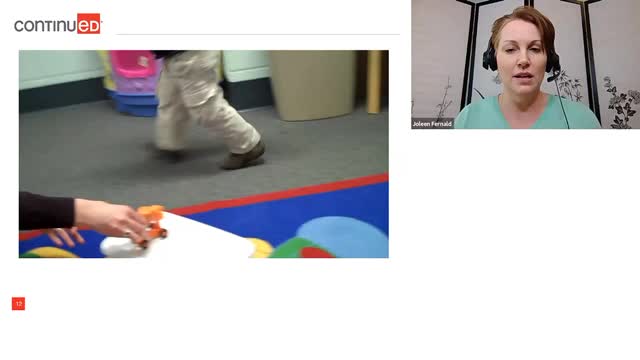
I want to share a video of a therapy session with a child named Mason, whose mother permitted me to share this moment. I do a lot of coaching in my sessions, and this mother was learning how to interact and celebrate the amazing strengths her child demonstrates. Mason is super funny, adorable, and very engaging. He loves trucks and moon sand, and he is deeply connected with the people in the room. As you watch this interaction, I want you to think about your own emotions and your immediate visceral response to the interaction.
In the video, Mason is just shy of three years old and was seeing me as part of the Hanen Program. The Hanen program is a family-centered speech and language therapy approach that equips parents with the skills to help their children develop communication skills. His mother is leading the interaction while I coach from behind the camera. You will hear her mention trucks hidden in the sand, and you will listen to us encouraging Mason as he says off and works to take the lid off the container. I was so engaged in watching the bond between mother and son that my camera angles are a bit off, but I hope you can feel the emotion of the moment.
Mason Video 1
As we continue, I want to tie these feelings back to the concept of ableism, another term I had to become familiar with as I began my journey in the neurodiversity movement.
Modern standards in 2026 remind us that these language shifts are part of a broader inclusive mindset that moves beyond simple human variation to a standard for leadership and innovation. It is also essential to recognize that modern models integrate intersectional perspectives, acknowledging that unmasking and identity carry unique risks for people of color. By choosing language that honors how people actually think and identify, we move toward a more systemic responsibility of neuro-inclusion.
Ableism
Ableism subscribes to the idea that the neuromajority is superior to those who are neurodivergent. This mindset suggests that neurodivergent individuals should participate in therapy specifically to become more like the neuromajority. This perspective often stems from the medical model, which pathologizes differences and creates a perceived gap that we, as clinicians and educators, feel compelled to bridge by helping individuals become more neurotypical.
Ableism frequently surfaces in our everyday communication. It appears in metaphors, such as casually describing someone as emotionally crippled, and in jokes that rely on terms like 'hysterical'. It even shows up in euphemisms like differently abled. You may not have considered these terms as ableist, and I want to be honest that I still occasionally stumble over my words as I try to change how these terms seep into my casual language. These choices reveal our unconscious biases and can lead to the internalization of harmful stigmas.
When we use or tolerate dehumanizing language, we signal to those around us that such attitudes are acceptable. For instance, while most people now recognize that terms like retarded are offensive, failing to speak up when such language is used in a social circle essentially enables its continued use. Furthermore, disabled individuals may internalize these tropes, beginning to believe they are less valuable because they use a wheelchair or struggle in social situations. This stigmatization distracts from the points we are trying to make and normalizes the idea that disabilities are insults.
To avoid ableist language, we must first acknowledge the disability around us. Instead of trying to fix the person, we should focus on fixing the oppression. This involves educating those in our social circles and taking the initiative to increase our own knowledge. I encourage you to read autistic blogs and research topics like masking to understand how these cycles of negativity are perpetuated.
Do not make assumptions about the disabilities of others. If you are unsure of how someone identifies or how they prefer to be referred to, ask them. Seek to understand the specific barriers that impact their ability to access society and determine if there is a barrier you can help remove. When you make a mistake, own up to it and apologize. This is not about your personal opinion; it is about how the other person feels. In our current cultural climate, it is vital to take responsibility for our mistakes and recognize the impact of our words.
As we look at 2026 standards, we see a shift toward neuro-inclusion, which describes environments specifically designed for multiple cognitive styles. Modern models emphasize that it is not just about physical accommodations, but about adjusting rigid systems to honor how people actually think. This systemic responsibility recognizes that unmasking carries unique risks, particularly from intersectional perspectives. By adopting an inclusive mindset, we move beyond simple human variation toward a standard of leadership that values every individual identity.
Masking
The concept of masking, or camouflaging, describes the significant gap between how an individual appears in social contexts and what they experience internally. It involves a constant, elaborate effort to conform to social norms, with the ultimate goal of fitting in. While most people mask to some degree, such as being personable at a social gathering, neurodivergent individuals may mask throughout the day, in every class, and in every interaction.
Masking often involves suppressing repetitive behaviors, such as stimming, or reducing talk about intense interests. I work with a young lady who loves Disney princesses and knows every fact about them. Before I became aware of this movement, I might have taught her to suppress those interests to fit in better with her peers. In doing so, I would have been telling her that her interests are not valid, forcing her to work hard at masking while her internal thoughts remained focused on her passion. This creates a clash between her outward appearance and her internal emotional state. Other examples of masking include imitating neurotypical behavior or pretending to follow a conversation while internally feeling overwhelmed by sensory input, such as loud noises, itchy clothing, or strong perfumes.
Upwards of 70% of the autistic population masks, which is a truly staggering statistic. It is often motivated by a sense of threat or alienation and represents an attempt to avoid the ostracism that can come from being perceived as different. This process is not gender specific, but it is more common in females. Statistics show that three to four times as many boys as girls are diagnosed as autistic, partly because highly intelligent girls are excellent at camouflaging and are often diagnosed much later in life. My own daughter was diagnosed at 19, and for her, that identity was a breath of fresh air that helped her feel more comfortable in her own skin.
Newer research identifies a second layer of masking in which neurodivergent individuals feel pressured to perform super strengths, such as hyperfocus or pattern recognition, just to fit the strength based model of neurodiversity. Constantly putting on an act for teachers, coaches, and peers causes significant trauma, stress, and physical exhaustion. I compare it to the exhaustion I feel after a day of virtual therapy sessions, where I have to use an extra level of affect and energy to engage through a camera. While not an exact analogy, it helps us imagine the profound detriment to those who mask every day of their lives.
This constant battle can lead to meltdowns from social overload, severe anxiety, depression, and a negative impact on the development of one identity. Most disheartening is the research showing an increase in suicidal ideation for those who mask for long periods. Current 2026 guidance emphasizes that burnout is often invisible as people keep delivering results until a total collapse, making proactive maintenance and masking recovery essential. While the historical focus has been on the trauma of masking, 2026 research has shifted toward masking recovery and sustainable performance as the new success metrics.
As we move forward in 2026, our understanding of these modern models must integrate intersectional perspectives, recognizing that unmasking carries unique risks for people of color or those in male-dominated settings. Our goal should be neuro-inclusion, which involves creating environments designed for multiple cognitive styles rather than forcing individuals to hide their true selves. This moves neurodiversity beyond simple human variation to an inclusive mindset that acts as a standard for leadership and innovation. Under the 2026 Social Model, we emphasize systemic responsibility. This is not just about adding a physical ramp, but about adjusting rigid systems, like standardized work hours and sensory-heavy offices, to honor how people actually think.
Trauma-Pay Attention
I titled this slide "Trauma-Pay Attention" because I want you to step back and reflect on the interactions that occur during your sessions or classes. By being mindful of these moments, you can truly support individuals and help prevent trauma. Reflecting on the video of Mason from earlier, that interaction occurred early in the Hanen process, before his mother had learned much about how to join her child and celebrate him. At the time, her primary goals were for Mason to talk and to act like other children his age. Since that video is about fifteen years old, my own approach was also different then.
When I watch that clip now, I feel a sense of sadness and frustration. Mason was actually doing a beautiful job of checking in with his mother, but she was so focused on her goal of having him say the word 'off'. When he finally made an excellent approximation, she continued to push him for the final consonant sound. I also noticed the physical wrangling involved. She reached out to grab him and blocked his path to prevent him from walking away. I hypothesize that Mason was trying to move to the other side of her to see the box from a different angle, but we will never know because his movement was restricted.
This type of interaction is what we want to move away from as we adopt a more modern perspective on neuro-inclusion. In 2026, our standards for success shifted away from simply optimizing performance toward prioritizing recovery and sustainable performance as key metrics. While the older medical model focuses on correcting a child's behavior to meet neuromajoritive standards, the 2026 social model emphasizes systemic responsibility. This means instead of physically or socially "blocking" a child like Mason to make him conform, we adjust our rigid expectations to honor how he actually thinks and moves. By focusing on proactive maintenance rather than crisis response alone, we can better support our clients' long-term mental health and prevent the invisible burnout that often precedes a total collapse.
Assessment To Support Neurodiversity
When I consider how to begin supporting neurodiversity, families, and our collective professional knowledge, the primary step is in our assessment process. Now that you are aware of masking and its prevalence, you must be conscious of it during every evaluation. Our goals have shifted away from simply optimizing performance and toward supporting masking recovery as a core success metric. Current 2026 practices for Speech-Language Pathologists prioritize Gestalt Language Processing intake forms and language samples over standardized tests, which often fail to capture the accurate profile of neurodivergent children.
A crucial second step is to remove ableist language from your report writing. I strongly advocate for the use of identity-first language in all documentation. Additionally, it is essential to include a dedicated section for strengths and talents. I can share from my own experience as a mother that receiving reports focused entirely on what my child could not do was incredibly difficult. It is vital to celebrate what a child can actually do.
In my intake packet, I include a section titled gifts, talents, and strengths. I use this to gauge where parents are in their journey. Are they celebrating their child’s unique abilities, or are they feeling the weight of comparing them against neuromajoritive standards? This comparison often widens the divide in the caregiver-child relationship and perpetuates the cycle of masking.
I also encourage you always to reframe your findings to be positive. For instance, rather than stating a child cannot sustain attention or is climbing the walls, you might say that the child enjoys exploring their environment and moves rapidly from one activity to another. This reframing highlights curiosity and visual interests as strengths we can build upon. It takes practice to shift this language, but rereading your reports with this lens will reveal many growth opportunities.
In our current landscape, we must recognize that this shift is part of a systemic responsibility to adjust rigid professional standards to honor how individuals actually think and develop. For older clients, updates are needed on AI-assisted recruitment tools and the shift toward skills-based hiring, such as job simulations rather than traditional interviews. Beyond a definition of human variation, the 2026 standards view neurodiversity as an inclusive mindset that extends beyond HR policy to become a standard for leadership and innovation.
Goals To Support Neurodiversity
Writing practical goals is necessary to support neurodiversity truly. When you write better goals, you move away from compliance-based goals. We are not writing goals that say a child will sit for five minutes or play with a toy as intended. Instead, we must presume competence, assuming that every individual has the capacity to engage and enjoy interactions without being forced into a specific mold. We are also moving away from specific social skills training because it can be dehumanizing. Writing goals about eye contact or simply teaching the names of emotions is not enough. Through my training as a DIRFloortime provider, I have learned the power of meaning. While a child might be able to name a thousand different feelings from flashcards, they may not yet understand what those emotions actually feel like in their own body. If we focus only on social skills programs that use terms like rock brain, we risk using ableist language that negatively shifts a child's self-identity. I was once on that path myself, but I now realize that teaching direct eye contact often forces a student to mask. They spend so much energy staring at a forehead that they have nothing left to devote to a great conversation or an excellent idea they want to share.
Goals should support human rights, dignity, self-determination, and advocacy. Self-determination means helping a person determine for themselves what they want and what they hope to achieve. I have learned to ask my clients what they want from our time together. Even with non-speaking individuals, we find ways for them to share their interests and tell us if they enjoy an activity. This builds a beautiful, trusting relationship that can last for decades. When drafting your reports, focus on the following priorities:
Do write goals for self-advocacy, such as teaching a preschooler to ask for noise-canceling headphones when a room is too loud. Do write goals for perspective taking, helping older children understand their own importance and that of others. Do write goals for interoception and self-regulation. The current 2026 goal focuses specifically on interoception, which is the understanding of internal body signals, to support nervous system regulation. Do write goals that support the agency, such as a student advocating for breaks when appropriate.
Conversely, there are specific areas we should avoid:
Don't write goals for treating autism, as autism is an identity, not a condition to be cured. Don't write goals for eye contact with a communication partner. Don't write goals about having quiet hands or whole body listening, which can be impossible or even painful for neurodivergent individuals. Don't write goals intended to extinguish perceived neurodivergent social deficits or use social scripting.
If you are looking for specific resources, the Therapist Neurodiversity Collective is a fantastic group for speech, occupational, and physical therapists. It provides insight from actual autistic therapists and offers handouts to help you craft goals that celebrate a child's profile while supporting their personal desires, such as learning how to navigate social invitations. As we look toward 2026 standards, our success metrics have shifted from simple optimization to masking recovery and sustainable performance. We recognize that burnout is often invisible, meaning people keep delivering results until a total collapse, making proactive maintenance rather than just crisis response essential.
By adjusting rigid systems to honor how people actually think, we move neurodiversity beyond a simple definition of human variation and into a standard for leadership and innovation. The 2026 Social Model emphasizes that it is not just about adding a physical accommodation, such as a ramp, but about adjusting rigid systems, such as standardized work hours and sensory-heavy offices, to honor how people actually think. Furthermore, modern models incorporate intersectional perspectives, recognizing that unmasking carries unique risks for people of color and those in male-dominated settings. For older clients, updates are needed on AI-assisted recruitment tools and the shift toward skills-based hiring, such as job simulations rather than traditional interviews. 2026 standards view neurodiversity as an inclusive mindset that moves beyond HR policy to a standard for leadership and innovation.
Interventions That Support Neurodiversity
Please focus on interventions that truly support neurodiversity by prioritizing human rights and dignity over any specific philosophy. A developmentally relationship-based model without a behavioral connection is often the best path. While I am partial to DIRFloortime, other models like SCERTS or Hanen can be effective, provided they do not involve behavioral interventions. It is essential to understand that attempting to integrate behavioral backgrounds, such as ABA, with these models is not supportive of neurodiversity and can instead be trauma-inducing. The only model supported explicitly by the Therapist Neurodiversity Collective is Autism Level Up, an excellent resource co-developed by an autistic occupational therapist and Amy Laurent.
When working with individuals, always honor their preferred communication method, including augmentative and alternative communication (AAC). It is essential to model language and always ask for permission before touching a client. In my own practice, I have shifted from using hand-over-hand assistance, which can be restrictive, to using hand-under-hand support. This allows the individual to maintain autonomy and pull away if they are uncomfortable.
Current breakthroughs in 2026 have further expanded our intervention toolkit. We are seeing a significant shift toward integrating Ecotherapy, or nature-based therapy, to help calm the nervous system by moving sessions out of sedentary clinical spaces. For many adults and older adolescents, technological integration now includes AI-assisted tools and nervous system regulation tech, such as VNS stimulators or brainwave training, to support mental health autonomy. As clinicians, we must also focus on workplace advocacy for those transitioning to adulthood, teaching them to navigate legal and tribunal risks and advocate for quiet zones or asynchronous communication at work.
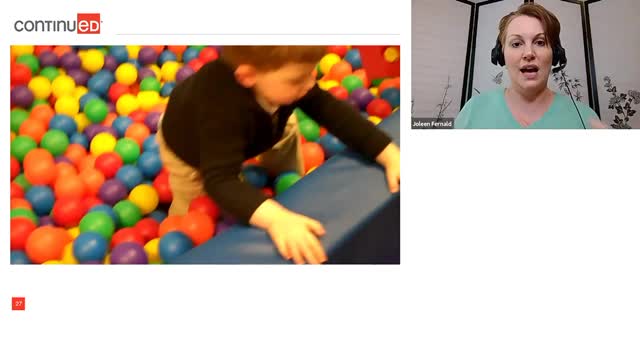
I want you to look at this second video of Mason, this time interacting with his dad. This occurred after several coaching sessions where we focused on celebrating and joining Mason rather than withholding items to force a specific communication. As you watch, notice your own emotional response compared to the first video. In this sensory motor activity with the ball pit, you can see a sense of shared joy. While it is not a perfect session—dad still holds on a bit and prompts for a response—Mason appears much more engaged and is clearly having fun.
Mason Video 2
This shift in interaction style aligns with the 2026 Social Model, which emphasizes systemic responsibility. Success is no longer just about optimizing a child's performance to meet neuromotorive standards; it is about masking recovery and fostering sustainable performance. We must recognize that burnout is often invisible, and our goal should be proactive maintenance that honors how a person actually thinks. By integrating intersectional perspectives, we acknowledge that unmasking carries unique risks, particularly for people of color. Ultimately, neurodiversity should be viewed as an inclusive mindset that sets a new standard for leadership and innovation in our field.
Human Rights and a Paradigm Shift
Ultimately, neurodiversity is a human rights issue that requires a paradigm shift in how we support individuals and their families. This transition demands that we presume competence and provide access to robust communication methods without prerequisites. We must uphold self-determination and prioritize client needs, ensuring unrestricted access to the accommodations and supports that work for them. Our practice should focus on expanding individual strengths, advocating for equitable inclusion, and teaching self-advocacy skills.
Adopting this mindset means refusing all behavioral methodologies or programs derived from behavioral training, as these can be trauma-inducing. We must reject social skills training models and objectives intended to mask autistic characteristics, such as forcing eye contact or attempting to extinguish stimming. Instead, we accept behavior as a communicative attempt and work to understand the underlying message rather than ignoring it. We must respect bodily autonomy and never withhold emotional comfort, food, or favorite items as a means of manipulation.
Current 2026 standards view neurodiversity as an inclusive mindset that moves beyond mere human variation to become a standard for leadership and innovation. This includes a systemic responsibility to adjust rigid environments—like standardized work hours or sensory-heavy offices—to honor how people actually think. We also recognize that unmasking carries unique risks, particularly through intersectional perspectives involving people of color or those in male-dominated settings. Success is now measured through masking recovery and sustainable performance rather than compliance-based optimization.
Regarding clinical practice, many of you have asked about specific situations. For example, when helping teenagers navigate social interactions in which they may be perceived as blunt, the focus should be on perspective-taking and repair rather than on social scripting. We can help them recognize their own feelings and develop ways to communicate their intent, so they can repair interactions when misunderstandings occur. Similarly, I do not use extrinsic rewards or behavioral conditioning for any client, including those with articulation challenges or ADHD. Rewards like sticker charts are extrinsically driven and do not foster the internal regulation or intrinsic motivation necessary for generalization across different environments. Instead, we can use 2026 breakthroughs, such as ecotherapy or nature-based sessions to help regulate the nervous system more organically.
I encourage you to explore the Therapist Neurodiversity Collective for research and resources that support these humane, trauma-informed practices. By shifting our focus from pathology to potential, we can provide a strong support base of peers and mentors for all neurodivergent individuals. Whether they are autistic, have ADHD, stutter, or live with other neurocognitive differences.
Pathology to Potential
So, again, pathology to potential, that's your takeaway. I could spend the whole rest of the afternoon talking about this stuff. Thank you so very much.
References
See additional handout.
Citation
Fernald, J. (2026). Neurodiversity: How to support agency and self-determination. PhysicalTherapy.com, Article 5028. Retrieved from https://PhysicalTherapy.com